Skip to content
ISEAGE Cyber Defense Challenges

Recent News

ITOCDC13: Shell Server and the Service Scanner

Some of you may have noticed this error on IScorE:

ssherror

IScorE’s scanner is only compatible with SSH version 2. In order to remedy this you’ll need to edit your SSH config file (most likely /etc/ssh/sshd_config). Make sure the Protocol directive is set to 2 and the HostKey lines are uncommented (comments begin with a # symbol), as shown below:
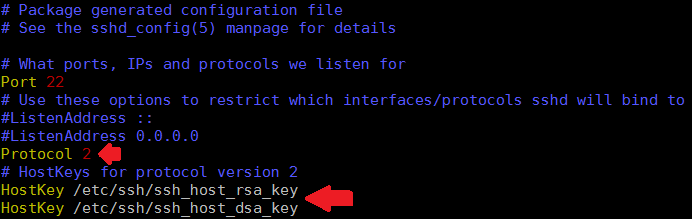
sshd

Afterwards, restart the SSH daemon by issuing “service ssh restart” as root. (Note: this command may vary by platform. If nothing else, rebooting the server will apply the changes).
Tutorial: Connect to Support Chat with Adium for Mac OS X

Here is a quick guide for connecting to the support chat server with Adium, a multi-chat client for Mac OS X.

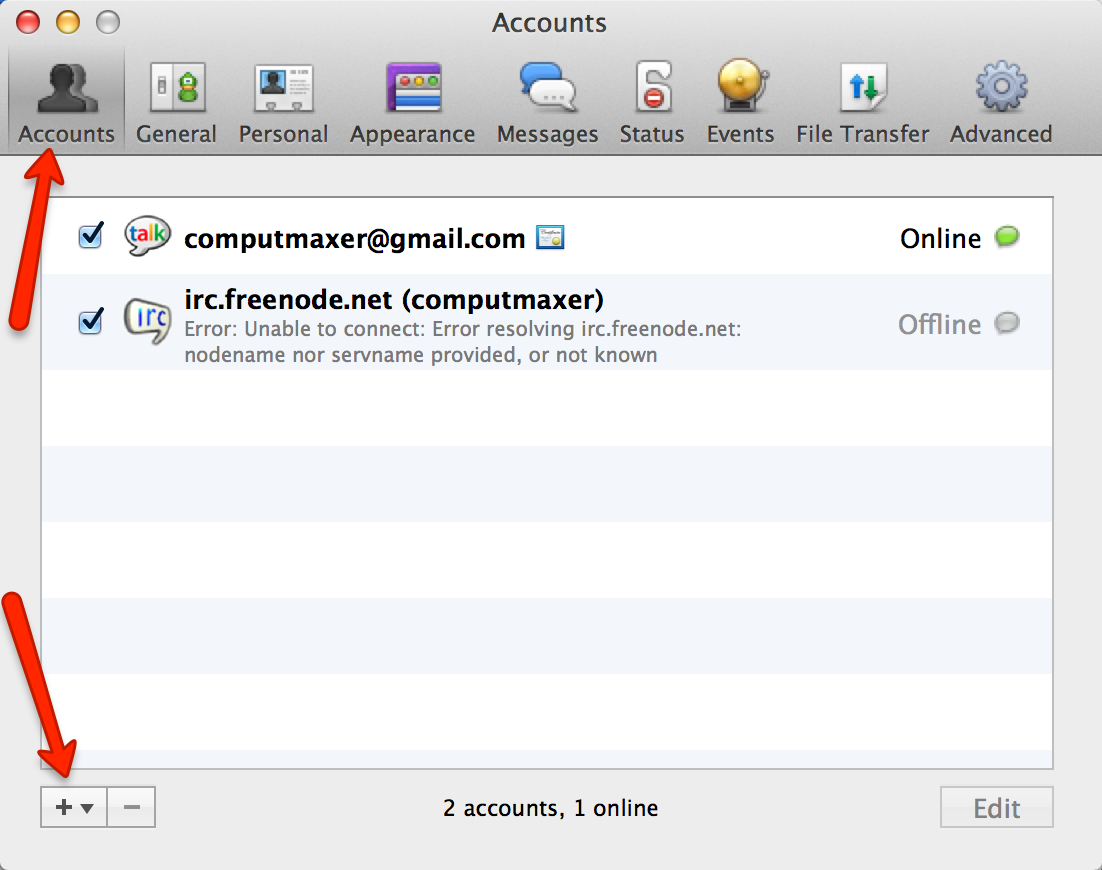
First, launch Adium and go to Preferences –> Accounts.  Click the ‘+’ to add an account.  Choose ‘XMPP’ for account type.

adium1

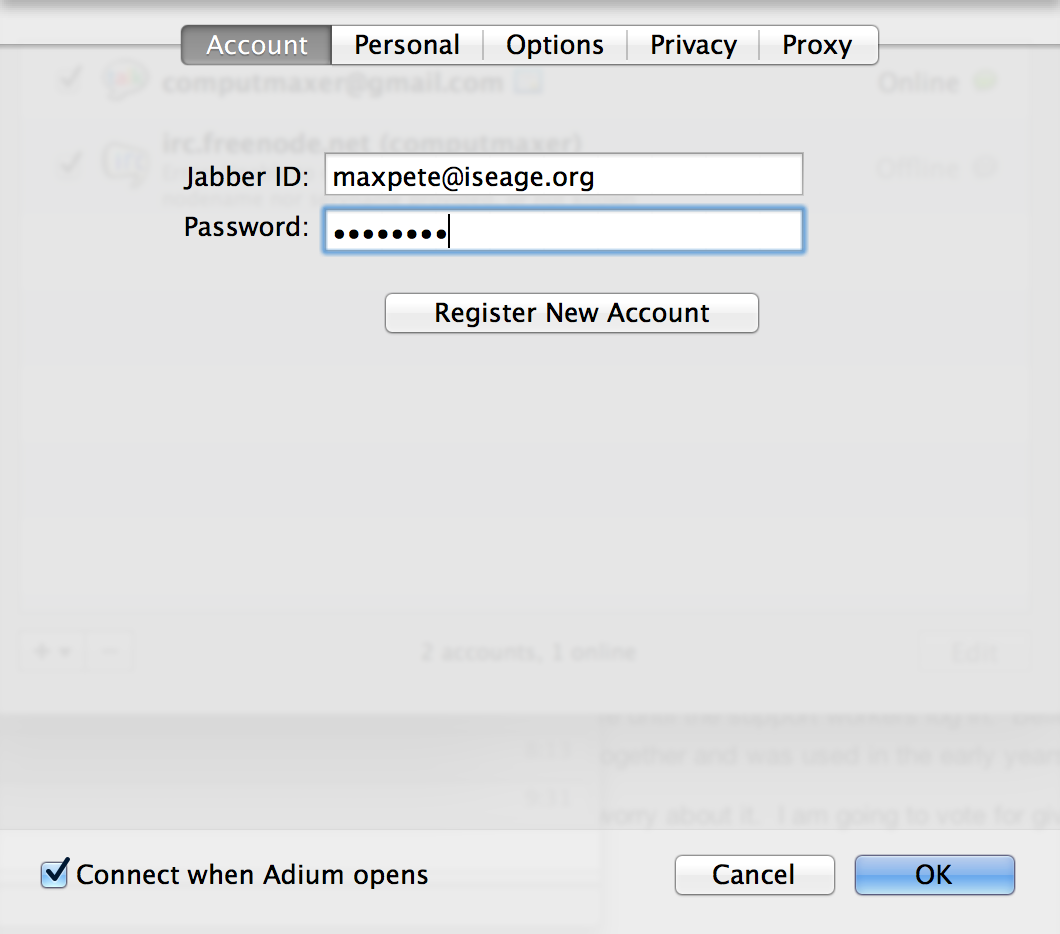
Enter your account name.  This will be <your_username>@iseage.org:

adium2

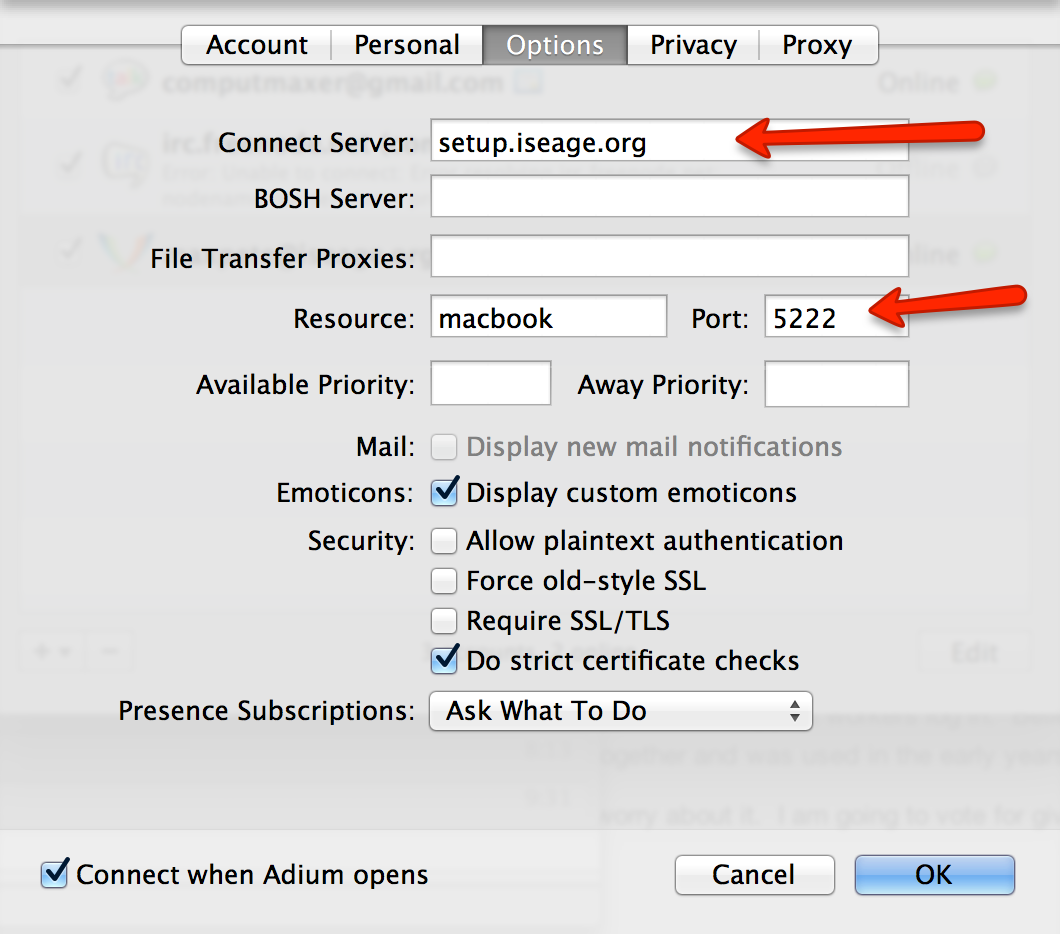
Next click the ‘Options’ tab and enter the server and port as seen below.  Server should be “setup.iseage.org” and port should be 5222:

adium3

You may now click ‘OK’ to add the new account.

Now you are ready to join a chatroom.  Go to File –> Join Group Chat… Choose the account you just created from the account dropdown list if it isn’t already selected.
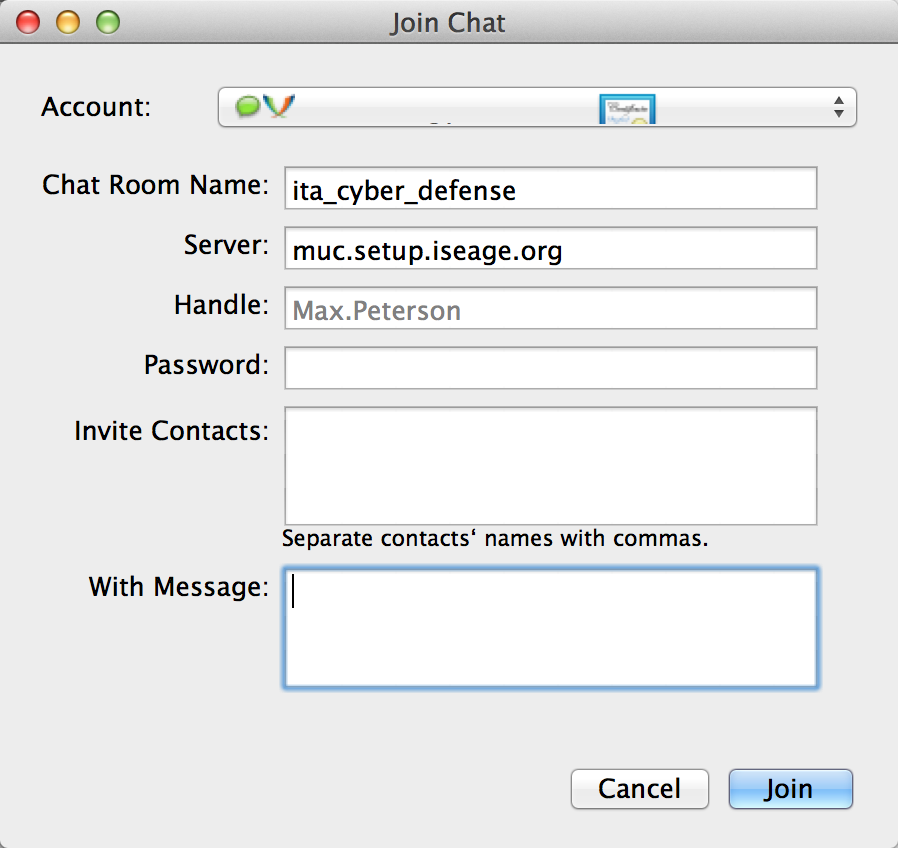
Type in the chatroom name such as ‘supportchat’ or ‘ita_cyber_defense’.  The server must be set to “muc.setup.iseage.org”.  Handle will be your nickname upon joining.

adium4

Repeat the last step for every chat room you want to join.

Congratulations! You’re finished!

Tutorial: Connect to Support Chat with Mac OS X Messages

Here is a quick guide for connecting to the support chat server with Mac OS X Messages application.

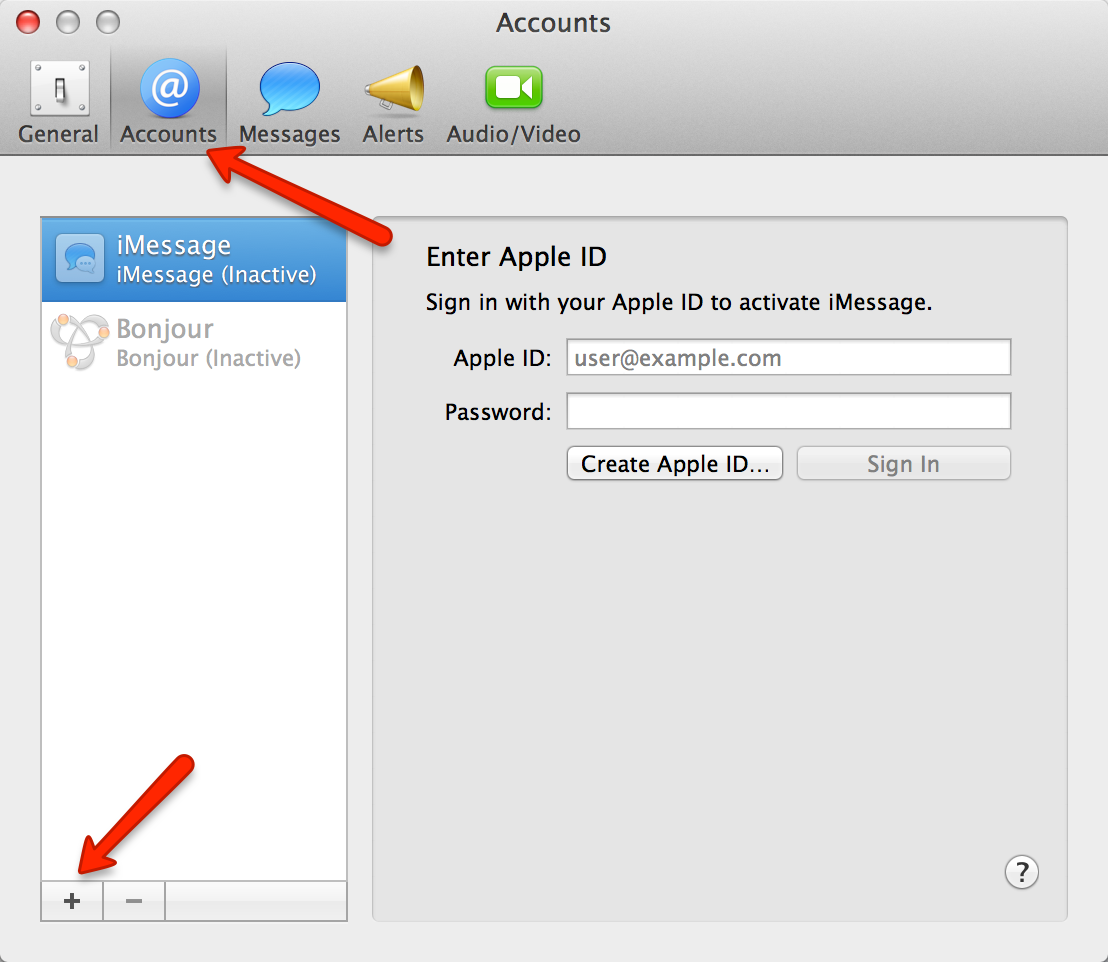
First, launch messages and go to Preferences –> Accounts.  Click the ‘+’ to add an account.

messages1


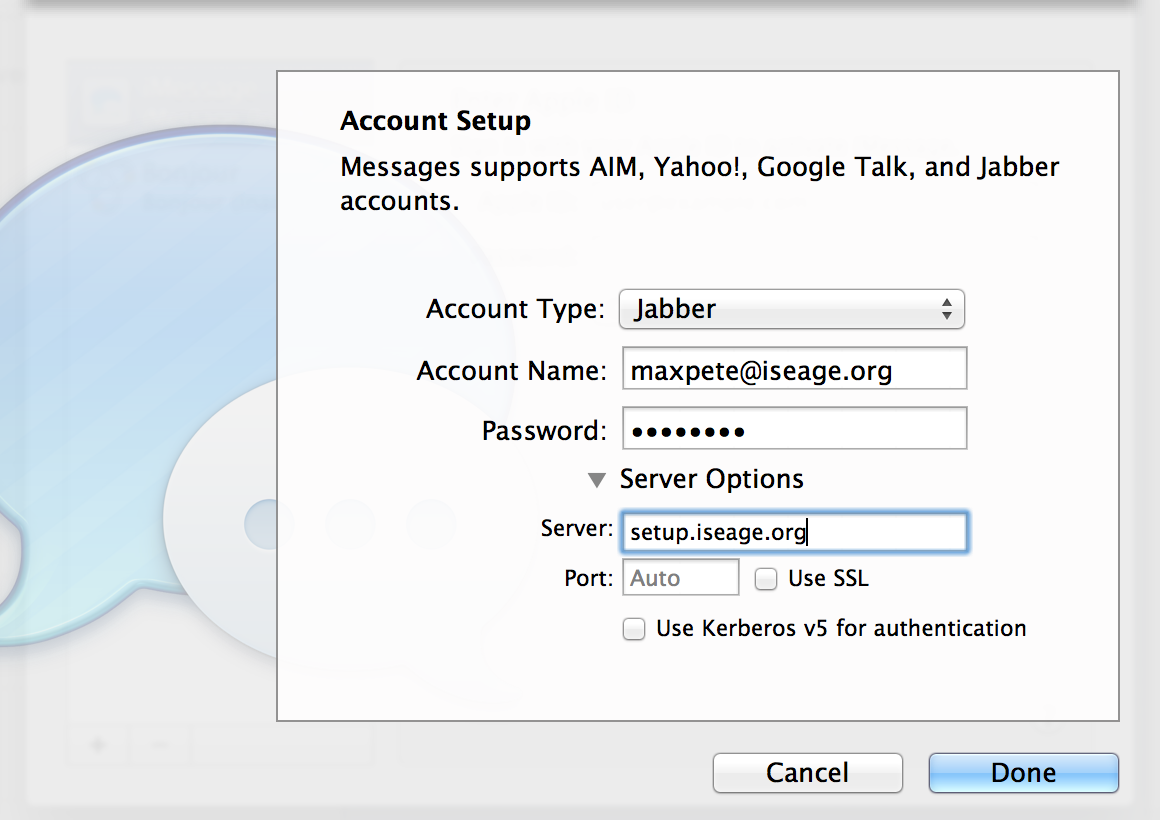
The account name should be <your_username>@iseage.org as shown in the following screenshot.  The server should be “setup.iseage.org”:

messages2


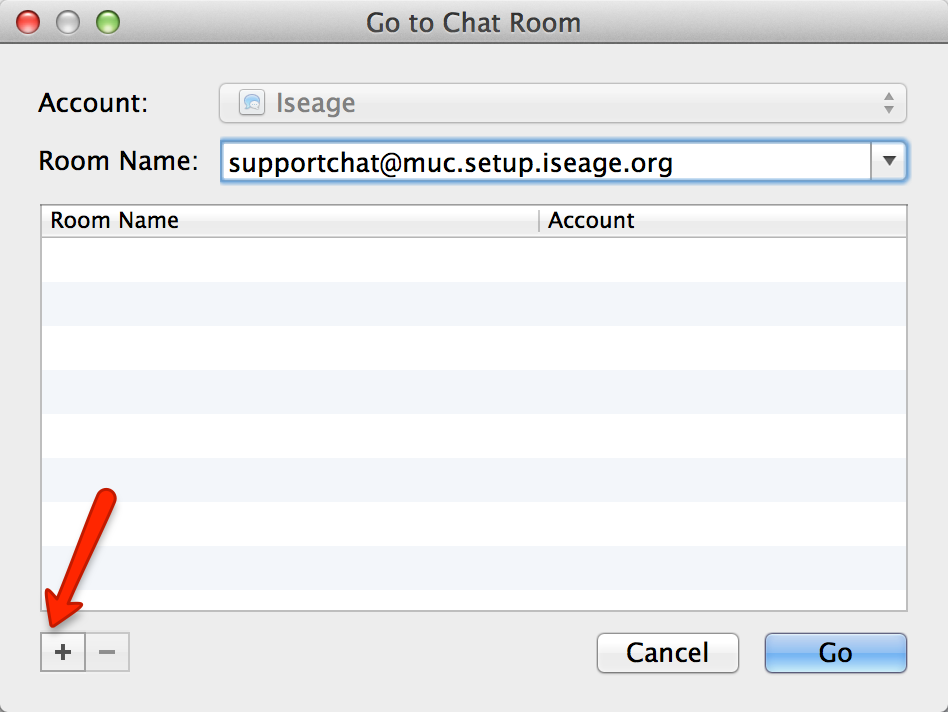
Next, do File –> Go To Chatroom… or use the keyboard shortcut COMMAND-R to join a chatroom.  The room name will be “<name_of_chatroom>@muc.setup.iseage.org”:

messages3

Repeat the last step for every chat room you want to join.

Congratulations! You’re finished!

Introducing the vSphere Web Client

Some teams have been experiencing some issues with editing the settings of your VMs. We’ve been trying to nail down the root cause, but in the mean time we’ve come up with an alternate solution: introducing you to the vSphere Web Client.

webclient

So far you’ve been using the desktop-based VMware vSphere Client to log in to vCenter. There is another method for access: the vSphere Web Client, the icon for which you can find on the desktop of the RDP hop. The Web Client is new to ISEAGE this year, and will eventually become the main method of accessing vCenter as the original vSphere Client is slowly deprecated. More importantly for our purposes, it has far fewer issues with permissions.

As with the vSphere Client, you can check the box to automatically use your CDC credentials, and you’ll need to ignore the certificate error. The Web Client also has some new features not found in the old vSphere Client, so we encourage you to familiarize yourself with it; when you arrive on-site, you will be able to access the Web Client directly on your laptops.

NCDC13 Original Images now available!

The four provided images are now available for download. Keep in mind these images have vulnerabilities and should not be run in sensitive environments!

NCDC13_Web | NCDC13_Shell | NCDC13_Exchange | NCDC13_DC

These files are also mirrored here.

The VMs can be run using the free VMware Player or the non-free VMware Workstation, which may be provided by your academic institution. If you’d like to run these on a local ESXi server instead, grab VMware vCenter Converter Standalone to convert them to the correct format. (You’ll need to register a free account with VMware to download ESXi and vCenter Converter).